What dealers and consumers need to know before they buy urges Steve Martin of Green Tech and Paramount….
 Walk into any pool or spa retailer’s storeroom and you will find drums and tubs stacked with a cluster of red-bordered diamonds printed somewhere on the label.
Most of the time, they are glanced at once when the delivery arrives and never looked at again. That is a mistake. Those diamonds are not decoration. They are the Globally Harmonised System of Classification and Labelling of Chemicals — GHS for short, and they exist to tell you, in a single glance, exactly how dangerous the product in front of you can be.
For anyone who buys, sells, stores or handles pool and spa chemicals, understanding what those symbols mean is not optional background knowledge. It is a basic condition of doing the job safely and legally. The GHS was developed by the United Nations to standardise how chemical hazards are communicated across borders, so that a warning label means the same thing whether a product is sold in Manchester, Marseille or Melbourne. Each pictogram represents a distinct category of hazard, from flammability to environmental toxicity to corrosive damage. Manufacturers are legally required to classify their products against these criteria and to display the pictograms that apply. There is no room for interpretation or marketing spin in that process; a product either meets the technical criteria for a hazard class, or it does not. That is precisely why the classification printed on a Safety Data Sheet carries far more weight than any verbal reassurance from a salesperson.
Three symbols that should make you stop and look:
This matters especially for products being pitched hard across the pool and spa industry. Some of these tablets carry not one but three separate GHS hazard classifications, and each one tells a different, serious story.
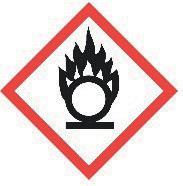 GHS03 — the flame-over-circle Oxidiser symbol means the substance can intensify a fire or trigger combustion on contact with other materials. The substance may cause or intensify a fire by supplying oxygen, so store it separately from flammable or combustible materials such as fuels, paper, wood, oils, and clothing. Unlike GHS02, which identifies a product that can catch fire itself, GHS03 products may not burn themselves but make other materials burn faster, hotter, and potentially more violently.
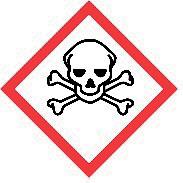 GHS06 — the skull and crossbones — is reserved for substances capable of causing serious harm or death from a single exposure, whether swallowed, inhaled, or absorbed through the skin. This is not a mild “may cause irritation” caution. It is one of the most serious pictograms in the entire GHS system, denoting acute toxicity. Depending on the level of toxicity, those products may not be allowed to be sold to end users.
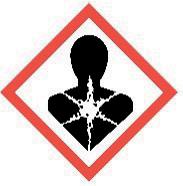 GHS08 — the Serious Health Hazard symbol, showing a silhouette with a starburst on the chest — covers chronic, systemic dangers that build over time: organ damage, respiratory sensitisation, carcinogenicity, or reproductive and developmental toxicity from repeated or prolonged exposure. Depending on the level of toxicity, those products may not be allowed to be sold to end users.
Any one of these classifications on its own would warrant careful handling and specific storage and transport conditions. Together, on a single consumer product, they describe a hazard profile that spans acute, chronic and fire-related risk simultaneously.
If a product requires specialist dilution procedures, personal protective equipment, or trained handling to be used safely, it is entirely reasonable and responsible to ask whether that product belongs in general consumer hands at all.
This is not a concern confined to the shop floor of a specialist pool and spa dealer. Chemicals that carry these classifications also turn up in hotels, holiday parks, leisure centres, gyms, health clubs, spas within hospitality venues and any commercial operation running a pool, hot tub or water treatment system
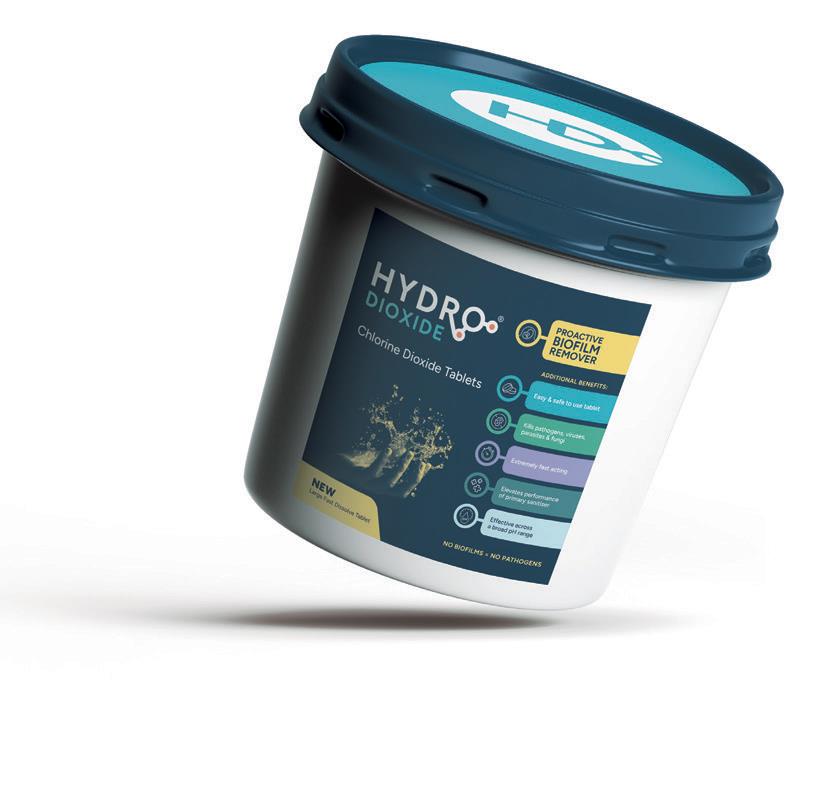 With a number of biocidal products being sold directly through online marketplaces, with no dealer, no counter conversation and no opportunity for a supplier to check that the buyer understands what they are handling. Anyone can add a product to a basket and have it delivered to a home address within days, regardless of whether they have read the Safety Data Sheet, own the recommended protective equipment, or have anywhere safe to store an oxidiser away from fuels and organic material.
When a product carrying acute toxicity, serious health hazard and oxidiser classifications is sold this way, the ramifications of something going wrong are not abstract. A member of the public injured, made seriously ill, or worse, by a product they bought online with minimal guidance is a liability question for every business in that supply chain, the platform, the seller, and the manufacturer alike, not just a regrettable accident. Retailers and marketplaces that allow this kind of product to move from a warehouse to a consumer’s front door with no meaningful safety conversation in between should expect that question to be asked of them if harm results.
RED FLAGS
Look closely at some of these products and you will find handling instructions that call for gloves, respiratory protection, or other personal protective equipment, alongside language limiting use to trained or professional operators. That instruction is not a minor technicality buried in the small print; it is the manufacturer’s own admission that the product is hazardous enough to require PPE and training to handle safely.
Which raises an obvious question: if a product genuinely needs professional-grade protective equipment to be used safely, why is it being sold directly to consumers with none of that equipment, training or supervision provided? A classification does not become less serious because a label also says “professional use recommended.” If anything, that phrase should prompt a dealer to ask harder questions, not fewer. Put it in the plainest possible terms.
Would your customer knowingly immerse themselves, their children, or their guests in water treated with a product classified as a carcinogen? Almost certainly not — which is exactly why that information needs to reach them clearly, before the sale, rather than being left to sit unread on a Safety Data Sheet they never asked to see.
Check the Safety Data Sheet (SDS ) Hazard classification is a technical, regulatory determination, not a talking point and it cannot be confirmed by a conversation or a sales brochure.
The only reliable way to compare two products is to put their Safety Data Sheets side by side and check the actual classifications, section by section. A confident assertion is not evidence, and the gap between the two can be the difference between a product that is safe for general consumer use and one that is not. As regulation is evolving daily, always make sure that the SDS is up to date; beware of online SDS which are more than 3 years old…
 DOES YOUR BIOCIDAL PRODUCT CONFORM
Ask your supplier if your biocide is registered on the ECHA ( European Chemicals Agency) article 95 register.
If a supplier can’t produce one, or is vague about it, treat that as a red flag rather than a technicality. The Biocidal Products Regulation (GB BPR in Great Britain, EU BPR Regulation (EU) No 528/2012 for EU markets governs something arguably more fundamental: whether a disinfectant or sanitising product should be on the market at all, and under what conditions. For pool and spa water treatment products specifically, this makes the BPR a critical companion regulation to hazard classification.
All retailers have a duty of care. Ignorance is not a form of defence. Just because you may not identify with the label or instruction on the packaging, it doesn’t automatically make it safe to sell. All retailers and suppliers must take reasonable care when placing chemical products into the hands of customers. That responsibility does not disappear simply because the retailer is not the manufacturer, did not formulate the product, or does not consider themselves a chemical specialist.
Where a product carries significant hazard classifications, the information needed to identify those hazards is normally available on the product label and in the Safety Data Sheet. A retailer who is buying, storing, marketing or supplying that product therefore has the opportunity and responsibility to understand what they are selling and the conditions under which it should be supplied.
Duty of care is not about expecting every dealer to become a toxicologist. It is about taking reasonable, proportionate steps when clear indicators show a product presents a significant risk.
At a minimum, that should mean asking:
• What are the product’s current GHS hazard classifications?
• Is the Safety Data Sheet current and consistent with the product label?
• Is the product authorised for the intended use under the applicable biocidal regulations?
• Is it intended for professional or consumer use?
• Does the manufacturer specify particular PPE, handling procedures, storage requirements or training?
• Is the way the product is being marketed consistent with those safety requirements?
• If another product is being described as an “equivalent”, has that equivalence actually been demonstrated by comparing the relevant technical documentation?
These are not unreasonable questions. They are basic checks that allow a retailer to understand the product before putting it into the supply chain.
The principle is particularly important where the product is being sold directly to consumers. A professional operator may have appropriate training, PPE, storage facilities and procedures. A domestic customer may have none of these. The same chemical can therefore present very different practical risks depending upon who is purchasing it, how it is stored and how it is subsequently handled.
A retailer should not assume that a product is suitable for general consumer sale simply because it is available from a supplier, appears on a marketplace, or has been sold previously without incident. Nor should a verbal assurance that a product is “equivalent” or “no different” be accepted in place of the underlying technical evidence.
 WHAT TO DO
You have a legal right to request in writing, from your supplier, a signed document on headed paper stating that the biocide conforms to the applicable UK Biocidal Products Regulation (GB BPR) requirements and is authorised or otherwise legally permitted for its intended use. If you are a dealer who has been offered, or is currently stocking, a product carrying GHS03, GHS06 and GHS08 classifications, take a few practical steps before you do anything else. Request the Safety Data Sheet directly from the supplier or manufacturer and read it in full, rather than relying on second-hand summaries. Compare it line by line against any product you are being told is “equivalent.” If the classification looks inconsistent with how the product is being marketed for consumer use, consider pausing further sales while you seek written clarification, not verbal reassurance, on the product’s hazard classification, intended use, and compliance with applicable regulations.
If customers have already purchased a product and a genuine safety concern later comes to light, provide appropriate safety information promptly and follow any guidance issued by the manufacturer or the relevant regulatory authority in your region. Consumers, for their part, should feel entitled to ask their dealer directly what a product’s classification means and to expect a straight answer, backed by documentation rather than assurance.
Hazard pictograms exist so that nobody has to take a chemical’s safety on trust. In an industry where products are stored at home, handled by non-specialists, and used around children, pets and swimming water, that clarity matters more than almost anywhere else. Before you buy, before you sell, and before you dismiss those red diamonds as small print — read them.
Understanding what you are buying is the first and most basic safeguard the whole system is built to provide.